I hate volunteering at trials, don’t get me wrong, I like to be helpful to the host club and I don’t mind keeping busy but if I have to sit through another class full of trotting, sniffing, stressed, confused dogs who clearly don’t want to be there in the first place I may just give PETA a call. A little harsh, I know, but I can’t help but wonder why these dogs are not liking the game as much as their handlers who clearly enjoy the sport enough to pay the entry fee, or worse, get up at the crack of dawn on a Sunday morning. When you think about it, it really does not make a whole lot of sense, dogs are meant to enjoy running fast, chasing prey, going over and through obstacles, natural or not. Sure, certain breeds these genetic traits have been diluted more than others, but I don’t know of many dogs who don’t love ripping through the dog park or chasing rabbits through the forest, just ask half the agility dogs I watched this weekend…I’m sure that’s where they would rather be. So my theory is that all dogs naturally love everything that is entailed in this game we play, but leave it up to the trainer, handler, owner to make too many of them flinch at the uttering of that god awful precursor to the beginning of their next work shift “break!”.
Now I know there are a few dogs out there that have a good excuse, maybe had a bad experience, maybe are physically in pain, maybe have “rescue issues” or maybe they are so overweight and out of shape that the task placed ahead of them just seems far too exhausting…I’m not talking about these dogs. Before I blame the owner, trainer, handler, I blame the organization. Who cares if the dog wants to be there or not if you achieve such almighty greatness as an ATCH or even more your gold or lifetime title. Ever think about how much those titles are costing you? I would think on average a lifetime title would cost nearly $7000.00 in entry fees, now that could buy your dog a pretty good time in treats, toys, even taking time off work to run at the park…and we wont even mention the money spent on classes, training time and seminars 🙂 So what’s the deal people? Why does success need to be measured in this way? I honestly believe our agility organizations are ruining would could have been great agility dogs and cause people to create dogs who are too careful to make error, afraid to run fast and have fun like they do at the park in fear of being punished or even just the sense of disappointing their team mate. That’s all I’m gonna say about that.
So next comes the blame of the handler, trainer, owner. I very strongly believe punishment is the root of all evil in all aspects of life…yes it works, I know, that’s why it’s so freakin evil. Whether its yelling at the dog for a knocked bar, leaving the ring for missing a contact, putting your hands on your hips and heaving a sigh of disappointment when the dog goes to the wrong tunnel mouth when clearly your lack of communication or training was to blame. “wong!”, “no!”, “I don’t think so!”, “knock it off!”, “I said target!”, “not again…” I can go on and on but really it just makes me want to run out there and give those handlers a taste of their own medicine, or should I say poison? Suck it up people, take responsibility for your lack of communication in the relationship you share with this four legged animal, they don’t know any better, they are dogs. Not sure what dogs ever did to deserve the treatment they endure, if I were a dog there would be no way in hell I would stay within that ring and put up with such nonsense, but alas they are dogs and they are under our control whether they like it or not. Ok, I know I’m not making many friends here, that’s why I have dogs , they understand 🙂
So we have covered the system, we have blamed the punitive trainers, next on the list is definitely the “good dog trainers” aka the fun suckers. Its all about timing, criteria, reinforcement, doing it the “right” way, control, control, control and worst of all…perfection :s I’m not sure why it is that people with sniffy, distracted, reactive, hyper, out of control dogs need to learn to sit ringside and offer long drawn out minutes of eye contact and “handler focus”. Click, treat, click, treat, click, treat….man its no wonder those dogs are looking for something more exciting to look at, I think I might rather eat horse shit or sniff butts. It’s all about building a “working relationship” right? Teach the dog to pay attention and show control, be responsible, never leave work, offer the rewards you give them, do what you say…sounds a lot like a day job to me. Would you rather spend your free weekends with your boss or with your best friend?…I know you all answered the latter. Agility should not be “work”, it should be exciting, it should be fun, it should be exhilarating. So does your dog wanna be there or do they have to be there? Rather than obsessing on focus and control why not give the dog a good reason to give you their undivided attention and actually enjoy playing, not working with you. So lure, shape, capture, feed, tug, or praise, who really cares, from experience, motivation has a lot less to do with “training behavior” and a lot more to do with “playing with your dog”. Give those crazy, sniffy, reactive, fearful dogs something to do! Play, tug, do tricks, chase, be chased, rather than fighting the distraction of the fast moving dogs or interesting smells, become the distraction that your dog cannot take their eyes off of. Respect your dog, treat them fairly, learn to have fun and sincerely enjoy the time you spend together, this will be the start of a true relationship. So find the joy in playing with your dog, making an idiot of yourself, being goofy, don’t worry so much about “doing it right” and let go of the reins a little bit. Everyone will eventually know the feeling of losing your team mate, your friend, your partner, and what would you rather remember, the ribbons on the wall or the endless amounts of joy and good times you shared together? And I am by no means saying you can’t have both, just talking priorities people! So go play with your dogs and if you can’t learn to truly enjoy them then maybe you should just leave the job to the other dogs at the park.
….I’m Back!! Summit’s First Trial
April 4, 2011
Yes, I am actually going to attempt riting on this thing again, with spring finally here I am finding my motivation 🙂
So this weekend was Summit’s first real trial!! I can’t say it was my best weekend, but Summit put up with me anyway. With strep throat, fever and not much of a voice we drove down to Olds for the weekend, adamant about attending my baby dogs first trial. The weekend was filled with interesting experiences including sluming it at some ghetto motel with only a space heater, a crazy april snow storm on saturday, losing my purse which contained my camera and all my credit cards, not to mention my poor attempt as a competitor, popping antibiotics, advil, cold meds and halls between runs…haha, you know you love agility when…
I was very pleased with Summit, he had perfect startlines with no foot movement, great weave poles, followed my handling cues well, impressed me with his obstacle performance and made me laugh just about every run. He is still the perfect puppy I brought home a year and a half ago and he can do no wrong. He isjust such a joy to work with and I am super stoked about getting to play with the big dogs! So we have a busy summer of training ahead of us, gotta work on keepin his feet up, a bit more on contacts (running and stop!) and getting him a faster handler 🙂
Presto makes 2010 Canadian World Team!
April 24, 2010
Yay! and Riot is the medium team alternate….check out the team!
Road Trip!
February 17, 2010
We just returned home from our trip to California where we had 3 days of agility seminars with Greg Derrett. It was a bit of an adventure driving through LA and renting my own car for the first time but it was lots of fun. Summit and Riot got lots of training time in with 2 days of masters handling for Riot and a foundation day for Summit. It was a nice change just having 2 dogs, they got to ride shot-gun together the whole trip and were both very well behaved in the hotel and airport.
Summit’s foundation puts all my other dogs to shame in every single skill he knows – drive, tugging, start lines, circle work, focus, retrieve…none of his skills compare to the shelties! So my thoughts after the november seminar were “why not devote the next few months to re-visiting the shelties foundation?” after all, I have only been training Summit for 6 months now and Riot will turn six years next week! Its easy to say “with my NEXT dog” but of course it is never too late 🙂 Since November I have just been working lots and lots of foundation with Riot, focussing on flat work and keeping her head while fast dogs run, no equipment except in trials, just in my living room and flat work outside and at the arena. We have been proofing all our handling cues with bowls of treats on the ground and working speed, motivation and trying to build our tug drive. I have been more conscious of reinforcing in “reinforcement zone”, no more reinforcement in the crate, on a chair, table or equipment, all rewards have been in front of me or in a down stay on the ground beside me. I have to say all that work payed off, not only was Riot a super star at the seminar but she was in a down stay for most of the seminar, no barking, lunging or obsessing on all those fast dogs!
Here is a quick video showing some good moments from the seminar:
Video from our last trial in Edmonton:
Here are some great shots of Summit in California


Finally a video!
December 31, 2009
Summit chewed through my video camera cords, lap top charger, and cell phone charger a while ago (that is his only weakness when it comes to chewing 🙂 ) but we got a brand new camera for Christmas!! Here is a video of some training we did last night:
Summit is still a very perfect puppy with a such a great attitude and temperment, he is just so much fun to train – he even makes circle work fun 🙂
It All Goes Back To…..
December 29, 2009
Bet you thought I was gonna say “foundation”…wrong! “relationship”…nope! “desire?”…closer. Wanna know what I believe is the biggest hole in most folks foundation training? REINFORCEMENT, there you have it, the answer to all your problems. The biggest most important component of a good foundation is establishing rewards your dog goes crazy for. Rewards that we trainers can fit in our pockets such as food and toys are the main tools we have as positive dog trainers. When you bring your new puppy home you will discover there are plenty of things they will value and find reinforcing but likely very few of them will be as easy to control as a game of tug or a morsel of food. It could be things in the environment, other dogs, people, places or events, our job as dog trainers is to build value for interactive rewards like tug of war and food rewards such as puppy kibble.
When you start to think about all the places that you can go wrong in agility training, all the dogs struggling whether it be with motivational issues, dogs shutting down, dogs who stress over failure, dogs with no start lines, contacts, wide turns, off courses, dogs who are just plain slow or dogs who are distracted while working. If the tug toy in your pocket where that million dollar reward the only thing that would stand between you and greatness would be timing and criteria. The trouble comes when we are not patient in building up those reinforcers before moving forward onto the actual agility training.
I would have to say this is the biggest thing I have learned this year with regards to dog training. To have Summit be able to walk into any environment and give me his 110% focus from 3 months old was not much to do with having a naturally focused puppy, it was the fact that he is so crazy about toys, tugging, fetching, playing, you name it. I will admit that he has this drive for toys the day I brought him home but we have played and tugged and played and tugged to the point where he would choose tug over just about anything. This lesson was then re-affirmed at the Greg Derrett seminar I attended last month. It seemed that when working Preston and Riot all my training issues lead back to the same place…not enough value for the reinforcement. Preston not driving off the start line fast enough when I am stationary, well I can’t tell you how many recalls I have done trying to build speed while standing stationary, not much has helped. All my shelties tug and I use it as a reward in agility but they are not CRAZY over the tug the way Summit is. If Preston was CRAZY about his tug reward he would have more of a reason to get to me quickly. Then there is Riot who finds chasing and watching the other dogs running far more reinforcing than anything I have to offer her, she still will suck to equipment easily and ignore handling cues because she is not too concerned whether she gets the reward at the end, the chase is enough for her.
If you build lots and lots of value for a toy you will have a good head start with your foundation training and on your way to a good agility dog. Of course just ask Summit about building value for food 🙂 We have been working on increasing the value for kibble as food rewards are important for certain behaviors. Summit has been learning to gobble up a handful of food as fast as he can to star a game of tug. When Summit is really high and excited such as while being restrained for a recall or in his crate just before being released to run with all the dog I take that as an oppertunity to build value for food. He now gets that the faster he eats the food reward the faster he gets whatever it is that he wants. I am pretty sure he would swallow a penny if I offered it to him now 🙂
So our winter training project for all dogs has been and will be raising the value of tug and food, it is not enough that they just tug or just take food, its gotta be worth a million bucks!
Photos
December 27, 2009
Some recent shots of Summit

7 months


7 months

6 months

6 months
6 months
December 1, 2009
Not sure where the time has gone but Summit is not over 6 months old! We have been very busy doing lots of training, here is a quick update:
Socializing: Although Summit has shown no fears of new people, dogs or places we continue to try and go to new places a couple times a week. Whether it is a new park, new arena, pet store or parking lot we try to set 20 minutes aside and work lots of tugging mixed in with some loose leash walking and the odd recall if someone offers to hold. Summit has been doing lots of flying lately and since this will be a big part of his life I have made an effort to go to the airport early each time and play tug games, socialize and build value for his kennel in that environment. So far he doesn’t mind air travel one bit. Summit has had lots of opertunity to socialize with all sorts of dogs and puppies after class and at most seminars I have been at, he is great with the shelties now as long as there is room to run.
Agility Training: Although Summit and I are addicted to training our training plans have not changed much since I brought him home at 9 weeks. We are still working on tugging like a mad man everywhere we go with any distraction possible. PLaying lots of motivational games, recalls, bringing out as much craziness as possible. Every session we have he blasts out of the kennel and gives %110 speed, attitude, desire, you name it, he is so much fun to train. We are mostly still working on start line and control positions. Sit, stand and down with that crazy look in his eye. We have upped the distraction level to environmental distractions like te sheltie chasing a toy, ringside of an agility trial, children running and screaming, dogs tugging around him. We have not put the start line in front of an obsticle yet but it’s just about there. The other thing we have been working on is our flat work, he is a true herding dog and very since he learned to outrun me our flat work has been a major focus in our training. He is very good now and we have started proofing understanding by decelling and front crossing off toys. That is about all we have been focussing on for agility training, just perfecting the essentials before moving onto anything else.
Pet Training: A big portion of our training time is spent working on things like walking on a leash, being quite in the kennel, sharing toys and food with the other four dogs in the house, recalls, control positions at a distance, basically anything to make living with 5 dogs as easy as possible. Most nights Chase and Bounder get to help me train Summit to be quiet in the kennel, I work and play with the shelties and reward Summit with his kibble for not loosing his mind. This is a great oppertunity to work start lines after Summit’s eyes have been popping out and he is vibrating with excitement. Summit’s recall is good enough to run with other dogs and he is good about sitting and downing if I give the cue when he is out playing which is a very helpful skill to have. Our loose leash walking was going well until we went to california and forgot our gentle leader so we are back to basics for a bit then re-fading the head halter is at the top of our list.
So there you have it, nothing too fancy or exciting just focussing on making tugging with me the most reinforcing thing in his environment, start lines, flat work and everyday pet skills.
At 6 months Summit was 20″ and 34 lbs.
Losing Sight of What Matters…
October 19, 2009
Don’t worry, this is not some rant about how crazy we can be, throwing ourselves and or lives into this crazy sport we call dog agility. This post is about dog agility training and the importance of keeping in your mind a clear goal or end result for all the time we spend training our dogs. There are so many different theories, ideas and schools of thought on agility training these days that it is difficult to decide what to train that next puppy and more importantly how to train it. There is a lot more emphasis put on “foundation training” before obstacles, lots of words like “relationship”, “motivation”, “desire”, “control”, “value” etc. There are so many skill sets and behaviors you could teach a puppy as part of your “foundation training” that it is easy to lose site of the bigger picture. Summit is the first puppy I have focussed on training a foundation and a set of skills separate from the equipment, this is mostly due to all the time I have spent at Say Yes learning about the science of animal training and the foundation program they have created. In my mind what I am aiming for when I am raising Summit is a fast, athletic, agile dog who can get around the course faster than any other dog out there. Of course I want him to be able to do this safely and easily so that he will be able to run agility and be a normal dog for a long, long time. I also of course want that good family pet at home so that living with 5 dogs does not drive me over the edge. Accomplishing this goal may include training fast, independent obstacle performance, a great jumper, and a dog who responds to my body and handling with ease, but most importantly a dog who enjoys playing and chooses to work with me over anything else. There are always many different ways of obtaining any goal, I am training Summit the best way I know how using what I have learned through the Say Yes program, what my four other dogs have taught me and everything I have learned from teaching classes and instructing seminars to many, many different types of dogs and trainers.
I am assuming for anyone who want to be competitive in the sport their goal for a new puppy would be something similar to mine, the sport is about speed while maintaining accuracy and consistency. I challenge everyone out there to evaluate all the time they spend training their dogs and ask themselves if the skills they spend time teaching are leading them to their final goal or if you have somehow found yourself stuck on some useless tangent. Let me digress, not too long ago I really had a good laugh at myself, I was so proud of Preston’s see saw performance after his first season of trialing. It was my first time training a nose target for the end behavior and I had trained the many, many layers of understanding to create that all important nose touch at the end of the contact. It took me about 4 months and then anther 2 months trying to fix issues (foot movement, freezing rather than touching, coming off straight, etc.) I maintained criteria (almost always) for his first season and although the behavior did change a little I still had it at the end of his first season which is not always an easy feat. When timing obstacle performance a while back I compared the contact and weave times for all my dogs and lo and behold Preston’s see saw performance with its perfect nose target was the slowest performance of all my dogs! Yet I was so happy and impressed with all my hard work and dedication, how funny is that! I got so caught up in the challenge of training this new behavior that I lost sight of what really mattered…speed!
It seems silly and far too simple to screw up but I see it so often when teaching. Do you really think that spending time training body awareness is that beneficial to a dog that rarely breaks a trot round the course? Or how about the dogs with the perfect, proofed start lines, I mean you can throw toys, food, run past, leave the room, yet the dog does not care to LEAVE the start line to play the game? And all those dogs who have zero speed and motivation around the course yet when the handler is done the drill says “get in yer kennel!” and all of a sudden the dog flies back into the crate? Or how about the dog that has been trained to stay in their crate with the door open for the entirety of a class yet the dog would prefer to never come out? I think you get what I’m saying. There are many, many skills that are beneficial for training an agility dog but try not to lose sight of the end goal which generally centers around the word “speed” and in order to gain speed you need “motivation”. So before you think about training any specific skill to your agility dog, ask yourself what it is that will lead you to the end result you are looking for.
In regards to Preston’s see saw, don’t get me wrong, his lack of speed over the contact has nothing to do with the method itself, rather the way I trained it. Rather then being so concerned with perfection I should have been focusing on desire, fun and speed so that he wanted nothing more than to get to the end of that contact…lesson learned, Preston’s loss is Summit’s gain 🙂
Happy Training!
A very busy month!
October 9, 2009
We have had a busy month, starting with the trip to Austria for the world championships then flying out to Vernon, BC for a week of seminars, then directly to Moncton, NB for another 4 days of teaching and finally back home to starting my very own classes at a new arena. In the middle of all of that I have been attempting to raise and train my now 4 1/2 month old puppy Summit.
Worlds was fun, I was happy with the way Riot was running and although I wanted to do better over all we had many good moments. I will definitely need to work more on Riot’s ground speed if we want any chance against all those medium border collies. Vernon was fun, got to catch up with friends and met lots of nice new people. Summit got to go swimming at the lake and be a demo dog for the foundation workshops. Moncton was as always a great trip, this years groups have many great people and lots of talented dogs. The puppy group was a blast with 13 puppies in the group, it will be tonnes of fun to see each team progress each month. Although I hate leaving the older dogs at home the trips were great to get Summit into many new environments and meet lots of new people and dogs.
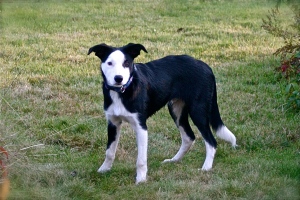
Summit is now 4 1/2 months and yes, he is still perfect 🙂 He is such a confident, happy puppy and is always so much fun to work with. Training him has taught me so much about high drive dogs and motivation. I have been trying to build more strength in all of my other dogs weaknesses:
-I have put way more effort into building value for tugging and just playing with me before building any new behaviors
-more focus on creating desire and drive in control positions rather than just proofing distractions
-We have made sure we have built equal drive and speed on recalls when I am standing still as when I run
-not barking EVER!
-if we work on shaping any behavior with food I have been very picky about keeping the desire in each behavior I teach him
-lots more jump grids!
We don’t know a whole lot more than what we posted last time, we do know how to swim and have been doing lots of socializing with other people and puppies. Because I have been so busy we havn’t started too many new things, but we have been building a stronger understanding with all the foundation games:
start line: he can hold a sit, stand and down without any paw movement throughout any distraction – throwing toy behind, running past him, running circles around him, kicking soccer ball, dogs recalled past. Just need to wok on dogs tugging and retrieving past him, then in front of equipment.
circle work – working on proofing handling manouvers with the toy ahead as a distraction. We have been running circles around toys and using the table as a distraction.
recalls- calling off people feeding him, tugging with him, while running to a toy, while eating supper, while chasing the shelties, while playing with other puppies…no problem!
Tugging – can tug on a low value toy while I play with and tease with his favorite. Can tug while shelties run circles around him and retrieve a ball, can tug with cookies practically up his nose, while fast dogs do tunnels, while children are near, while preston is tugging on another toy beside him (thats a tough one! While I grab the collar, blow in his face, pick him up and shake him upside down 🙂
Crate games – have been working on staying in crate while I send Chase and Bounder over equipment
Walking on a leash – gentle leader is being faded, occationally we have to put it back on but he is very good. We get lots of practice up and down the aisles of the pet store now that the snow is here
Body awarness – I was holding off on too much shaping in order to balance control with more craziness but we know the balance disks, perch faded, lift back legs, bow, yoga…
Sleeping – I have seen him sleep! Just once….
 Shape Up Dog Training Weblog